Why America’s National Deficit and Debt is Now a Household Problem

For years, Washington told the public that persistent deficits and rising debt were not urgent problems because Congress would act before the situation became too severe. Congress was warned by many advisory groups about the fiscal challenges ahead and was offered serious, workable solutions. Unfortunately, Congress has avoided reforms that would have been far less painful if enacted earlier than the reality we face today.
A June report from the US Government Accountability Office (GAO) lays out the concerns of America’s fiscal condition and shows that the economic burdens caused by Congress’s profligacy is no longer theoretical. Washington’s inability to control discretionary spending, reform mandatory spending programs, and restore fiscal discipline is now showing up through higher interest costs, credit downgrades, and inflationary pressure, burdening household budgets with rising costs. The bill for decades of inaction has arrived, and American families are being asked to pay it. Debt held by the public is already near the size of the US economy, and GAO projects that in the next 30 years debt could exceed 250 percent of the US economic output if we remain on our current fiscal path.
[caption id="attachment_2027" align="alignnone" width="1432"]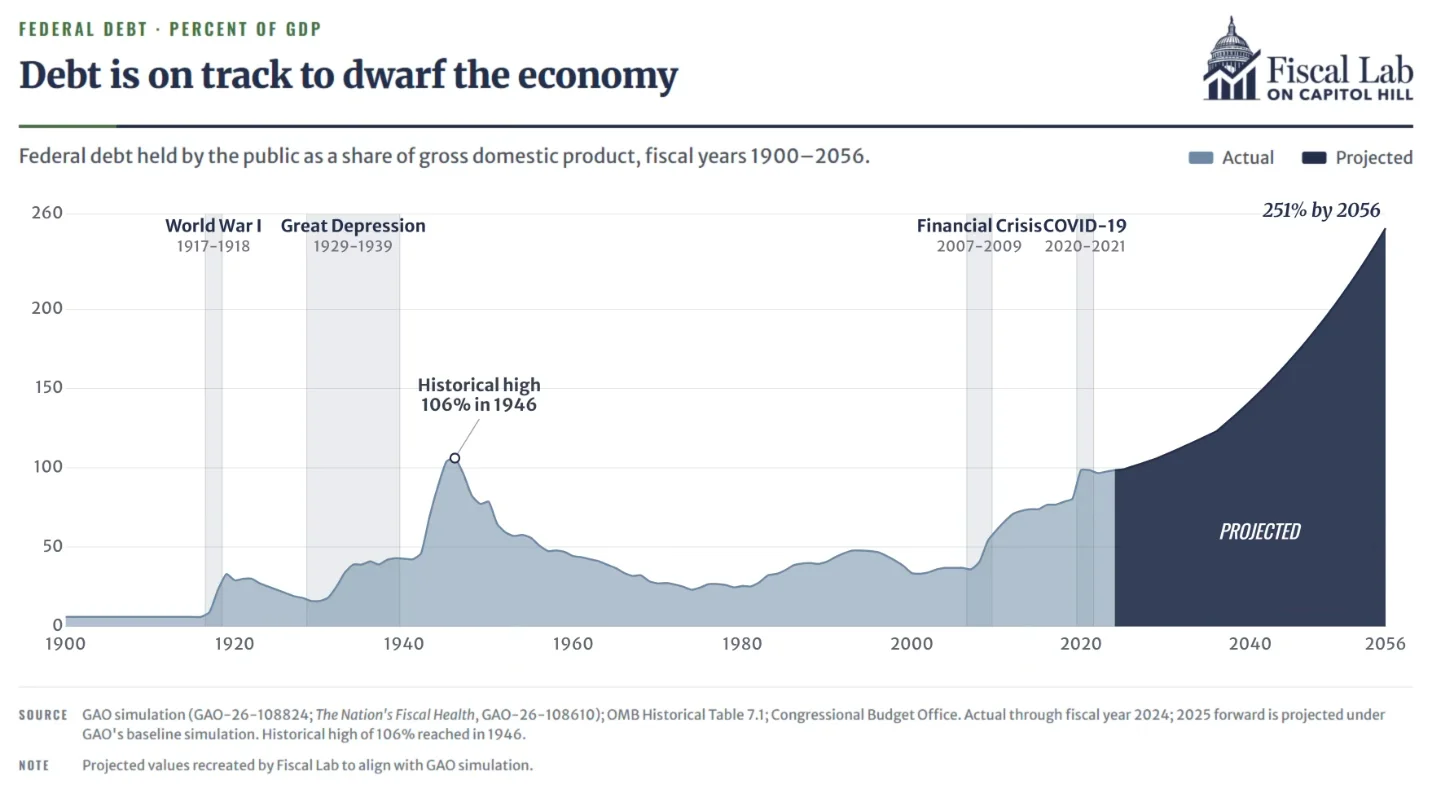 Figure 1 Debt held by the public as a percentage of the gross domestic product[/caption]
Americans have watched Congress fight over government shutdowns under the illusion of fiscal discipline. In reality, Congress is often arguing over a shrinking share of the federal budget - discretionary spending, which makes for annual theater that helps drive soundbites and reelections, but does little to rein in the growth of federal spending. The reality is that the majority of spending is now driven by mandatory spending, running on autopilot, and interest expense, not annual appropriations. Mandatory spending, such as Social Security and Medicare, is the part of the fiscal equation that Congress has refused to address, and interest expense is the burden of past deficits that Congress has refused to confront. This process problem was addressed in an earlier piece, “America’s Budget Crisis Isn’t a Mystery. It is a Process Problem.”
The problems facing these programs are not a surprise. Watchdogs have sounded the alarm for years, if not decades, about the pressure an aging population and rising medical costs would place on Social Security and Medicare. The Committee for a Responsible Federal Budget highlighted Social Security concerns in a project called “Tell the Truth about Social Security.” Earlier this month, trustees of both programs projected the trust funds that finance these programs will be exhausted in 2032 and 2033. Congress has been presented with numerous credible options: gradual benefit adjustments, improved inflation measures, phased changes in eligibility, means testing, payroll tax changes, and other reforms. Gradual reforms, enacted today, may not be painless but are preferable to allowing the trust fund to fully deplete, which may force sudden reductions or rushed crisis legislation.
Congress has been here before, avoiding gradual reforms until harsher realities arrive. Blue-ribbon commissions, deficit targets, PAYGO, sequestration, spending caps, and other fiscal tools have all been put forward as solutions. Yet Congress has repeatedly pushed those rules aside when the math gets tough. When lawmakers act as both the players and the referee, the rules mean very little.
All of this has pushed Congress away from the Hamiltonian norms of the past: protecting the creditworthiness of the United States, repaying our debts, and ensuring long-term fiscal strength. The decisions of past representatives have weakened the credibility of the US through mismanagement of the federal budget, repeated brinkmanship, persistent deficits, and growing interest expense. This weakening is evident in the credit downgrades of the United States on the world stage. All three major credit rating agencies - S&P, Fitch, and Moody’s - have lowered the US long-term rating, with fiscal deterioration, political brinkmanship, rising debt, and growing interest burdens all cited as core concerns.
The cost of this failure is now showing up in the lives of ordinary Americans, and the GAO has made clear that the United States is losing fiscal space to act. Higher federal borrowing contributes to pressure on Treasury yields, and Treasury yields influence borrowing costs across the economy. Families feel that pressure through higher interest rates on their mortgages, car loans, credit cards, and small business financing. Further, increased interest expense crowds out other forms of government spending, leaving precious little room for the US to respond to true fiscal crises, natural disasters, war, or other national emergencies.
To anyone paying attention, this should be cause for alarm. We are beyond fiscal storm warnings. Now is the time to hunker down. Moving forward requires the courage to admit that solutions must go beyond talking points and partisan blame. The math is clear that the problem is here today. The longer Congress waits, the greater the risk of a more draconian correction that leaves everyday Americans in an even worse fiscal position. The GAO report shows that to maintain debt at 100 percent of GDP, the changes needed - either through higher taxes or the reduction of federal spending that many families rely on - become increasingly severe for families if Congress delays action.
The actions required by Congress are clear: Take on budget imbalance as the governing responsibility required by the office. The math will require that both political parties come together to enact reforms, not because compromise is easy but because of the shared responsibility to American prosperity. The depletion of the trust funds will eventually force Congress to confront entitlement reform, but responsible leadership should not wait for crisis. Gradual reforms today can strengthen the nation’s fiscal foundation and spare Americans from the far greater costs of delay tomorrow.