Research Library / Lab Reports
Weekly Lab Report


This post will be the first of many weekly reports devoted to reviewing the Fiscal Lab’s work over the prior week or two. So, let’s begin. Below is the latest analysis the Lab has provided:

Why not reduce the debt limit? That’s the question posed by the Lab’s Doug Branch in an essay titled “Be Bold: Vote to Decrease the Debt Limit.” If Congress set the debt limit as a percent of GDP, then Congress could commit to reducing the limit by a couple of percentage points per year and easily achieve that goal by enacting legislation that allowed the US economy to grow at a faster pace.

A frequently asked Hill question is, how fast must the economy grow over 10 years if Congress does nothing to increase deficits? Parker Sheppard and I estimate in “Economic Growth Rates Necessary to Eliminate the Federal Deficit” that the economy would need to grow nearly 2.5 times faster every year than it currently is expected to grow. Even with an immediate 20 percent reduction in mandatory spending, the growth rate would need to be 1.5 times faster than forecast. In short, it is highly unlikely that we can grow our way out of our current deficits.

The principal reason why our deficits are unlikely to disappear solely from surging economic growth is Congress’s unwillingness to reform the drivers of deficits: entitlements. The Lab’s Joseph McCormack analyzes this appetite for deficits in two foundational essays, “Why Western Democracies, Including the United States, Are Experiencing One Fiscal Crisis After Another,” and “Can American Continue to Afford Its Welfare State?” The fiscal challenges facing the US are similar to those facing the other mature democracies, and a significant reason for those mounting challenges is the commitment to increasingly unaffordable income and welfare support programs.
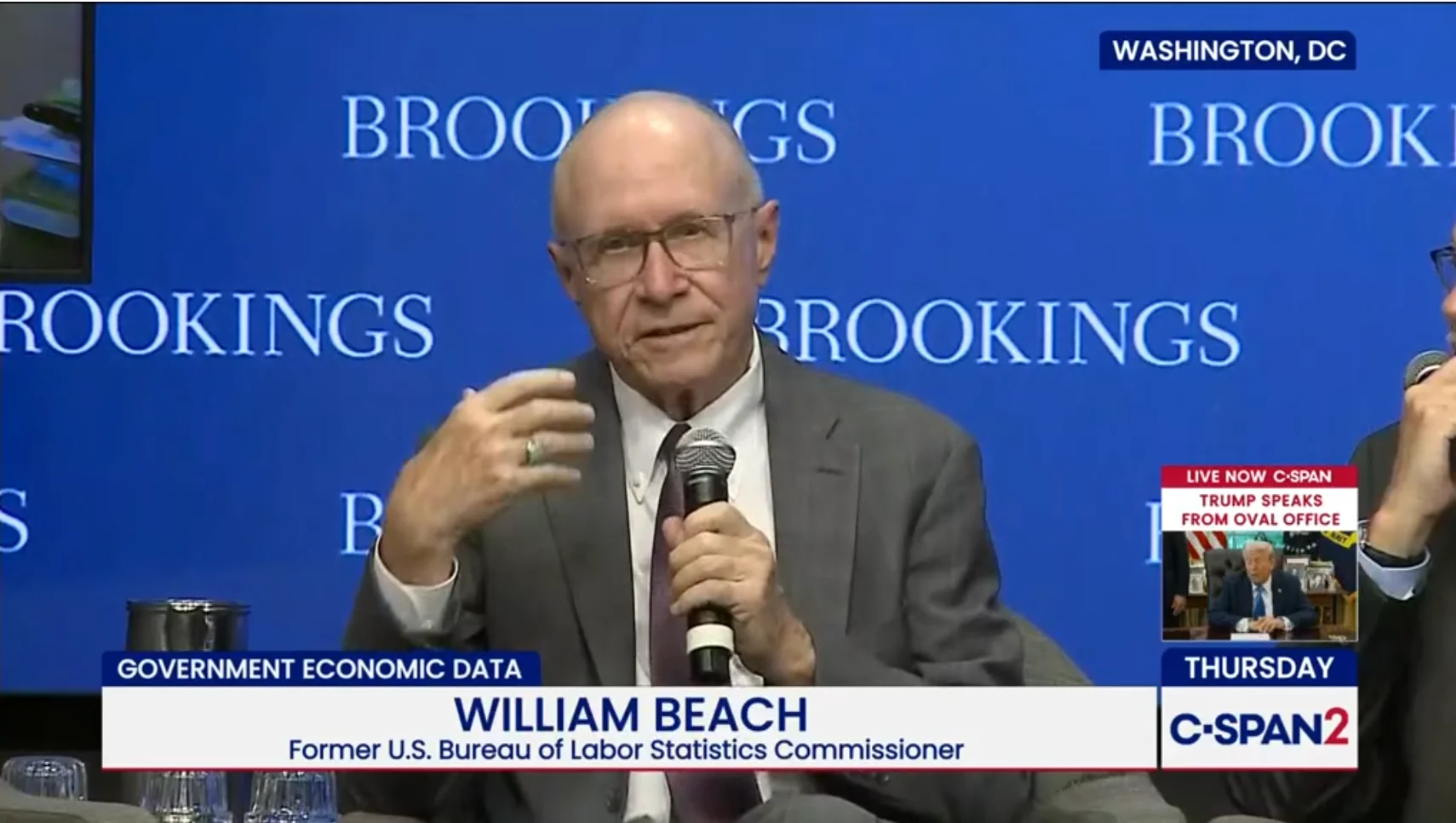
The ongoing controversies surrounding the Bureau of Labor Statistics (BLS) and the US statistical system generally kept me on the airwaves. The Brookings Institution sponsored a program that featured me and my predecessor at BLS, Dr. Erica Groshen, in a discussion of how BLS works and changes that could be made to enhance its effectiveness. See the program on government economic data, as well as an appearance on CNN’s The Lead with Jake Tapper.
The Fiscal Lab’s role on the Hill is the promotion of problem solving, particularly along the wide front of our major fiscal challenges. Our analytical products are devoted to assuring that no good idea for relieving fiscal stress goes wanting for the numbers to prove its worth. So, watch this space in the future for summaries of our essays, commentary on the state of the fiscal debate, and announcements of budget models and datasets for use in the great struggle to get our federal government’s financial house in order.